Unique Approach to Design

Some real estate developers build the same project over and over again in a single area. We’ve built in 17 states and 2 countries, and we can do that because we have a different process.
A lot of construction happens based on a static design. Builders have plans that work, and they need the site to bend to the product because the product doesn’t bend. Think: flat land, standard conditions. Here’s our 3-bedroom. Here’s our 4-bedroom. Pick one, and we’ll see you at closing.
This kind of approach wouldn’t work for us because we’ve built in Idaho, where roof overhangs need to be designed for 20 feet of snow load, in the Catskills, where you’d have to decimate the land first to get it flat, and in a strict HOA in Sonoma County, CA, where regulations dictate every part of the process.
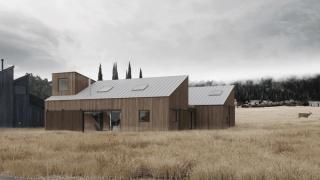
If we pulled single designs from a catalog, this just wouldn’t be possible.
Instead, we design each project for the land. Sometimes that means making sure we abide by HOA regulations, and sometimes it means adapting our building standards to allow construction on non-conforming lots. You can see the differences these adaptations make in the photos.
The system we’ve created lets us adapt to changing demands. HUTS exists between custom architecture and copy-paste mass development, which means we can use our core standards for our projects but adapt them to the specific criteria of the plot we’re working with. Rather than optimizing a single design for construction timelines and margins, we create flexible designs that give us the freedom to build anywhere.
We get an ever-growing set of design options and solutions for different land conditions, and you get a home that looks like it grew out of the land rather than being carved into it.


